Quantitative image analysis that scales with your pipeline
Your team runs high volumes of imaging data across programs and needs results that are reproducible, auditable, and consistent — not one-off scripts held together by a single scientist's knowledge.
Handles your real data volume and diversity
Biodock supports every major bio image format — .svs, .czi, .ndpi, .lif, .tif, and more — at any scale, from single-cell crops to multi-gigapixel whole-slide scans. Whether your pipeline runs histology, IF, TEM, or high-content screening, it's one platform instead of a different tool per modality.
Custom models, built and owned by your team
Train models specific to your assays and tissue types directly in the platform — no coding required, few annotations needed. Start with AI-assisted labeling, train a model as you build your dataset, and use that model to auto-label the rest at scale. Every model and label set is downloadable (YOLO for models, COCO for labels), so nothing is locked into a proprietary format your team can't take with them.
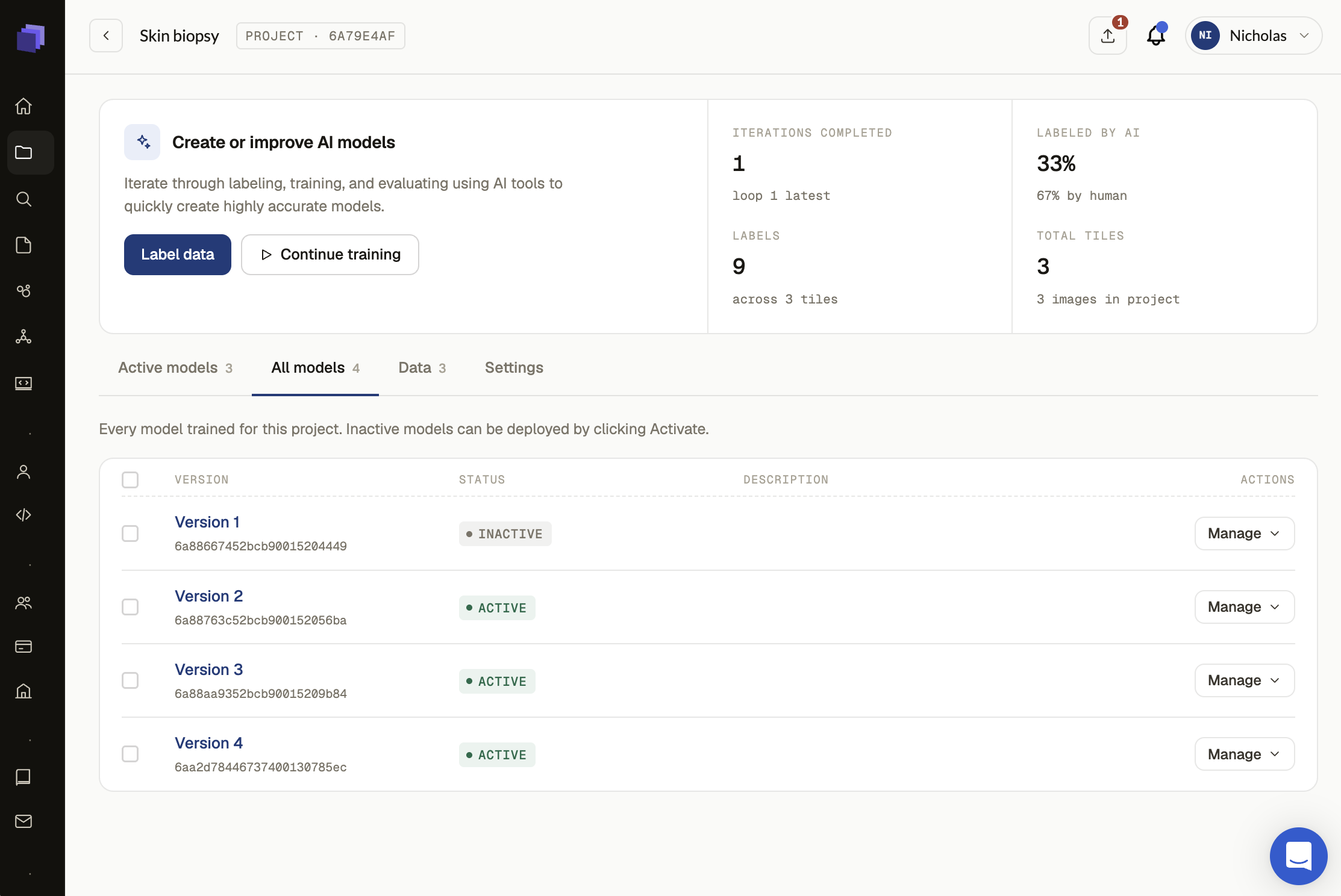
Every trained model version stays available, with a record of what ran
Reproducibility and traceability by default
Version history tracks every model, label set, and analysis run. Object-level output — measurements, geometry, classifications — is fully traceable back to source images, supporting the kind of audit trail R&D and regulatory-adjacent workflows require.
Built for teams, not individuals
Share files, AI Projects, and results across your team with permissions and comments, so biologists, data scientists, and computational teams work from the same datasets and models — not siloed spreadsheets and disconnected scripts. Connect via API or Python scripting to plug Biodock into pipelines you already run, and pull data in directly from S3, Google Drive, Dropbox, Box, or OneDrive.
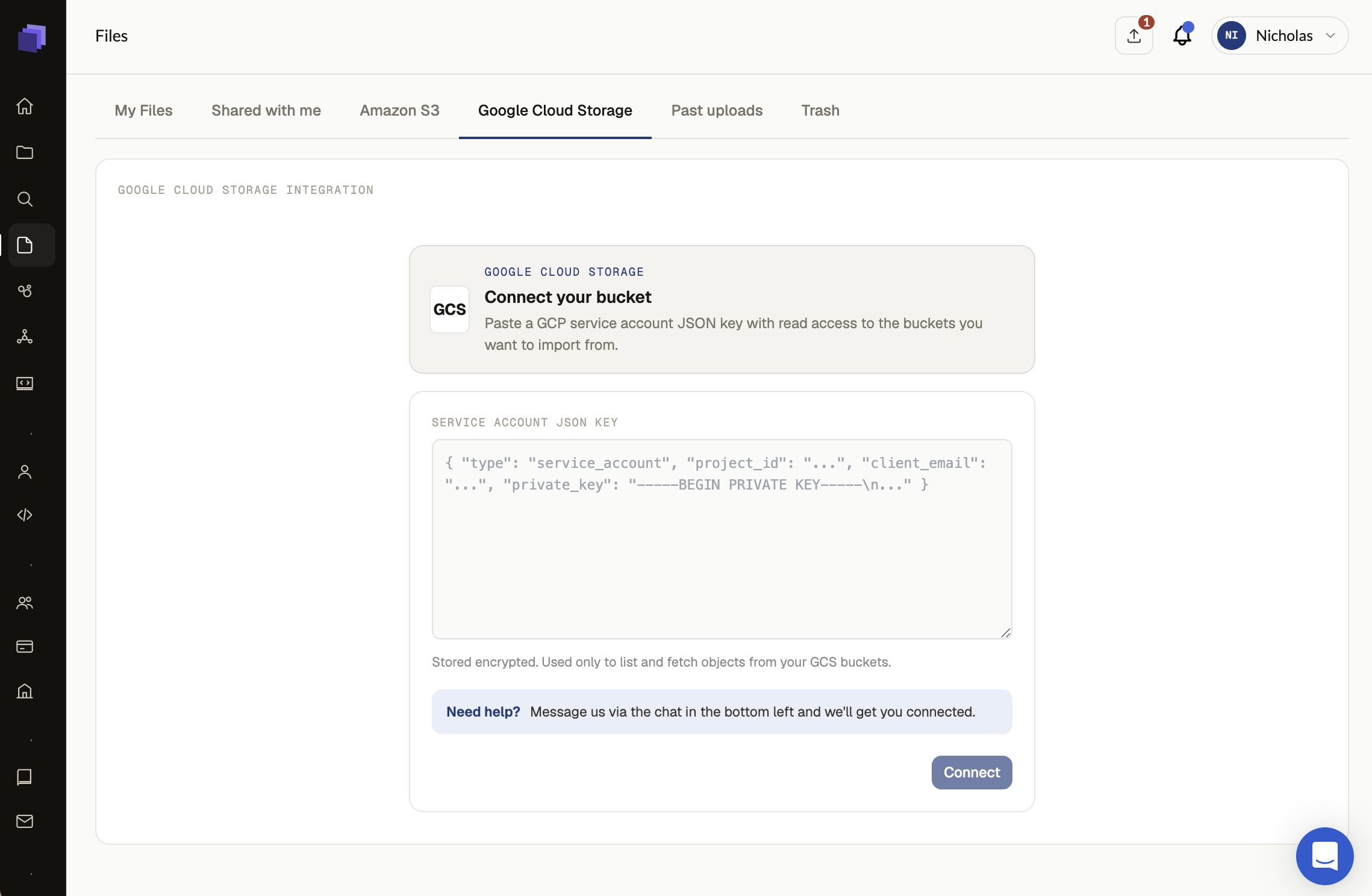
Connect S3 or Google Cloud Storage and pull data straight in
Turn your images into biological intelligence.
Start free, or talk to our team about your workflow.